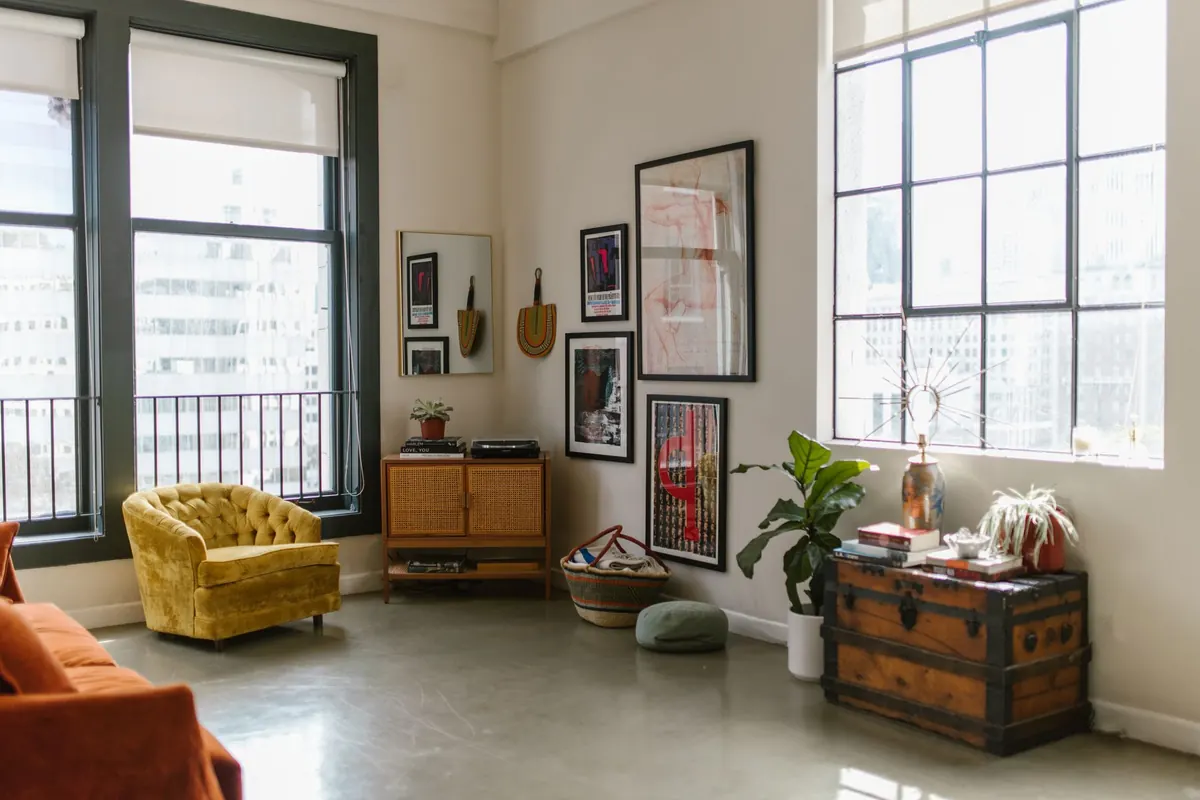
There's a particular kind of room that stays with you: a scuffed pine farm table under a slim black pendant, a velvet armchair from another decade pulled up to a plain linen sofa, and none of it looking like a mistake. You probably own half of that room already — a mirror from a relative, a flea market chair, a sofa you bought last spring. The work isn't buying more. It's deciding how the old and the new talk to each other, and that comes down to three things you can control: balance, scale, and color.
Comfortable mixes lean one direction and accent with the other. A workable ratio is about 70 percent modern, 30 percent vintage, or the reverse if your home is already full of antiques. The majority sets the tone; the minority adds character. When the modern pieces form the structure, let the old ones be the punctuation — a single gilt mirror over a plain console, one worn leather chair beside a clean-lined sofa. If your rooms are mostly antique, add relief with something simple: a low-slung contemporary sofa, a flat wool rug, a plain drum shade on a lamp.
One old piece among many new ones reads as a find. Ten old pieces among many new ones read as a shop.
Visual weight matters more than numbers. A carved armoire or a heavy mahogany sideboard pulls the eye hard, and it will swamp everything nearby unless you give it company of equal presence: an oversized linen sofa, a wide plain rug, a large modern floor lamp with a generous shade.
Antique chairs often sit lower and lighter than modern sofas, while wardrobes and dressers can be taller and bulkier than anything made today. Both create the same problem: a gap in height that makes a room feel unresolved.
Bridge it deliberately. Beside a low vintage settee, place a tall slim floor lamp or a narrow bookcase to carry the eye upward. Within a few feet of a towering armoire, keep surfaces low and quiet so the armoire can be the drama instead of competing with it.
Small vintage objects are the other scale trap. One brass candlestick on a shelf disappears; three or five grouped on a tray become a single deliberate shape. And resist lining everything along the walls. Pull the sofa forward, angle a chair, let the rug sit partly under the furniture — the room will read as collected rather than stored.
Choose three colors for a room and repeat them. Let wood count as one of them. Antique oak, walnut, mahogany and pine all carry warm undertones that fight cool grey, so a warm off-white, oatmeal, or soft plaster wall flatters old pieces and keeps modern shapes crisp. If you want a strong color, use it on one wall, one large textile, or one piece of furniture rather than everywhere.
Then take a tone out of the antique and put it on something new. Warm brown wood becomes caramel leather or terracotta. Faded blue-and-white porcelain becomes a denim cushion or a navy lampshade. Now the two halves of the room share something, and the pairing stops looking accidental.
Texture does the rest. Set a glossy ceramic lamp beside a nubby wool throw, or a smooth modern table under a rough oak bowl. Contrast in surface reads as warmth; too much of one finish reads as flat.
The fastest way to make an antique feel current is to change what it's for. A steamer trunk becomes a coffee table with books stacked on top. A china cabinet holds glassware and a record player instead of dinnerware. A wooden ladder leans in the bathroom with towels folded over the rungs. A vintage bench sits at the foot of a modern bed.
Use caution with anything electrical or structural. Old lamps, frayed cords, and brittle sockets should be checked and rewired by a qualified electrician before you plug them in, and any piece you plan to sit or climb on should be inspected for wobble and properly repaired. A beautiful old chair is not a bargain if it won't hold you.
Run through this list before you buy a new piece or shift furniture around:
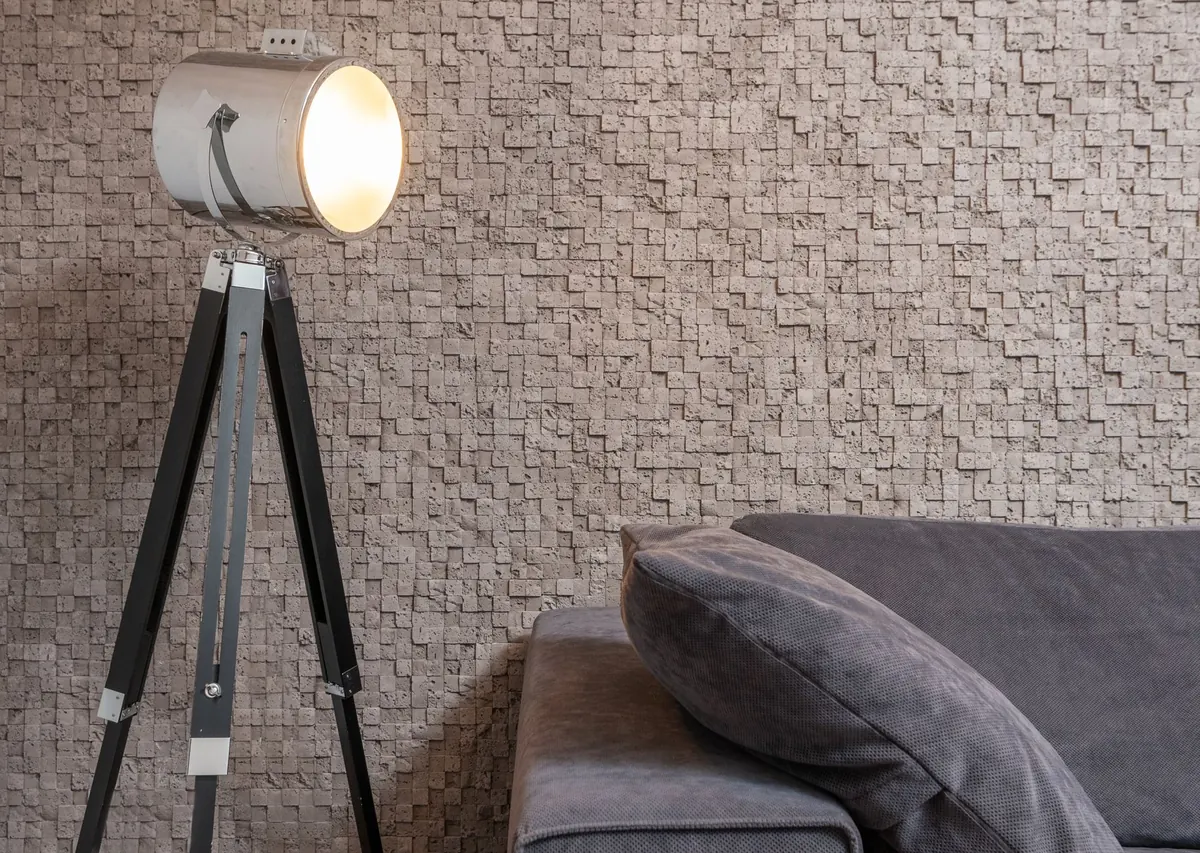
Lighting decides whether a mixed room works. Aim for at least three sources at different heights in a living room — a ceiling fixture, a table lamp, a floor lamp — and switch the overhead off in the evening. Choose warm white bulbs rather than cool daylight ones, which turn old wood grey and modern upholstery clinical.
Shades are the cheapest way to update a vintage base or soften a modern one; a plain linen or paper drum shade flatters almost anything. Put a dimmer on plug-in lamps so you can drop the light low at night. Low, warm light is what makes a room feel cozy rather than styled.
Don't rearrange the whole house this weekend. Choose one corner — beside a sofa, at the end of a hallway, on either side of a bed. Bring in one modern piece with a clean line and one old piece with a story, then add a warm lamp and a textile. Live with it for a week. If it feels calm rather than cluttered, you've found your ratio, and you can carry the same balance into the next room.
Photo: RDNE Stock project / Pexels